FounderCallistoEcopolish
The engineer who decided to own the supply as well.
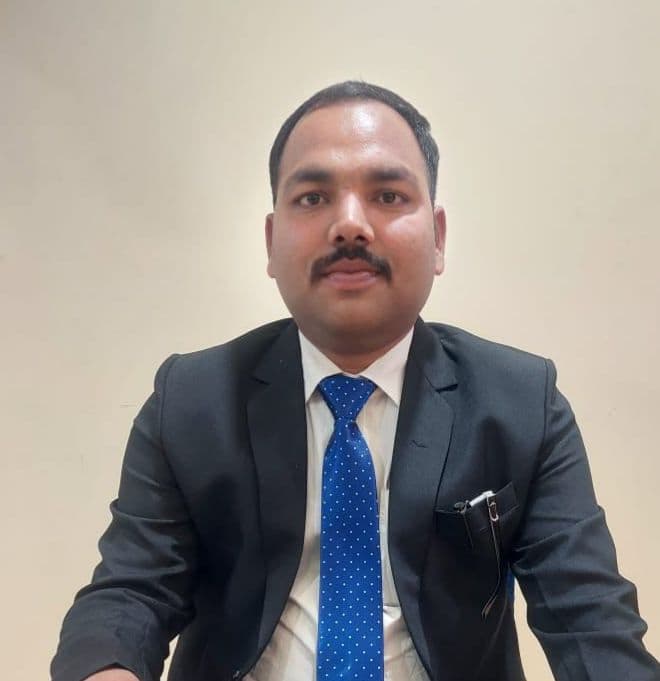
Kundan Kumar trained as an engineer, published a wind-energy project before he graduated, and then built a business around a complaint he kept running into: the design was rarely the problem, the material was.
In his words
“Job is very easy, when we know our strength.”
The journey
What had to happen first.
Not a career summary. These are the points at which the business he now runs became inevitable.
2011
Engineering at RGPV
Four years at the University Institute of Technology, RGPV in Bhopal — the state's engineering school, and the place where the habit of sizing something properly before selling it was formed. Electrical work is unforgiving of guesswork; the training is what teaches you that early.
2013
A wind turbine, built twice
His final-year project was a vertical-axis wind energy machine — sixteen months from January 2013 to April 2014, most of it spent on the gap between what the calculation promised and what the rotor actually did. The work was written up and published in IJILT. It is the first entry on this page for a reason: it is where the engineering stopped being theory.
2015
Out of the classroom, onto site
Graduation put him in front of real installations — load lists, panel schedules, the substitutions that get made on site when the specified part is not on the shelf. Seeing how much of that goes wrong at the supply end, rather than the design end, is what eventually made the case for starting something.
Callisto
The business, and the line under it
Callisto was founded on a straightforward premise: sell genuine electrical product through the authorised channel, and tell the customer when the specification is wrong before quoting it. The tagline he attached to the company — “you think, we do” — is the whole operating model in three words. The customer brings the problem; the company owns the execution.
Ecopolish
A second venture
Ecopolish followed as a separate business under the same ownership — a second line of work run on the same principle that a supplier is only worth having if it stands behind what it hands over.
Today
Still answering the technical questions
He runs both businesses from Gwalior and still takes the technical support calls himself. Customers who deal with Callisto on a project tend to end up speaking to him at some point — which is deliberate, not an accident of size.
On record
The parts that can be checked.
Qualification, published work and the languages he actually quotes in — stated plainly, because a founder page that cannot be verified is worth nothing.
Education
B.E. — University Institute of Technology, RGPV
Bhopal, 2011–2015.
Final-year work
Vertical-axis wind energy
Sixteen months of design and testing, Jan 2013 – Apr 2014.
Published
IJILT
International Journal of Innovations in Engineering and Technology.
Founded
Callisto & Ecopolish
Two businesses, both run out of Madhya Pradesh.
Works from
Gwalior, Madhya Pradesh
Close enough to the customers to still visit site.
Languages
Hindi · English · Marathi
Quoting, specifying and site work in all three.
How he runs it
The rules the company inherited from him.
Principle 01
Know the strength before quoting the job
His own summary of the work is that a job is easy once you know your strength. In practice that means declining what the business cannot do properly, and being direct about it early rather than discovering it at commissioning.
Principle 02
Engineering first, price second
A cable sized on three criteria, a breaker matched to the fault level, a system rated for the duty it will actually see. The cheapest line item is not the cheapest project once a replacement and a shutdown are counted.
Principle 03
The founder stays reachable
Technical support is listed on his own profile as a service he provides. It is not delegated away as the business grows — the person who owns the company is still the person who will pick up when a specification is in doubt.
Get in touch
Bring the problem. The execution is ours.
Technical questions on a specification, a load list that needs a second opinion, or a supply schedule you do not want to gamble on — those are the enquiries this business was built to take.